
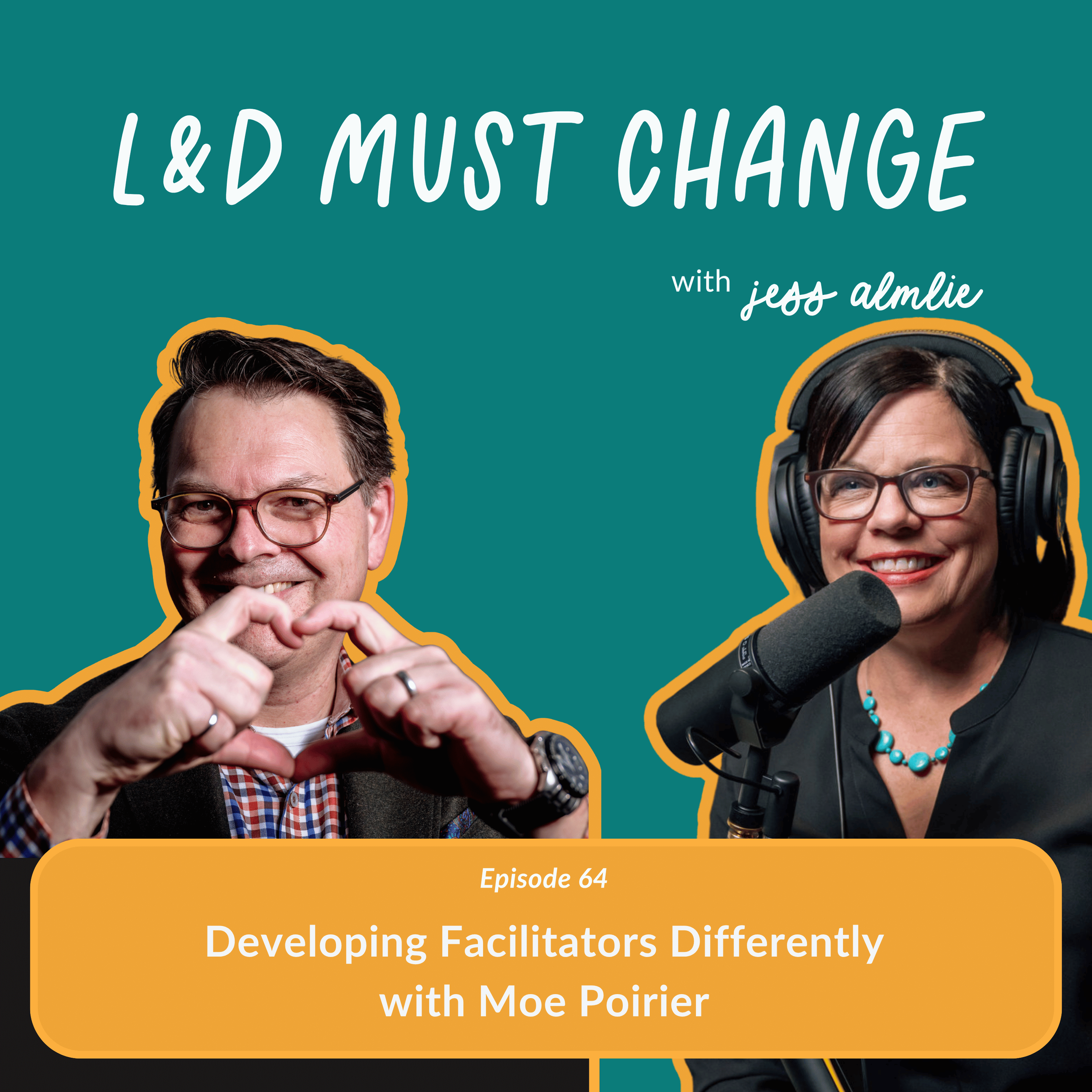
Episode 64: Developing Facilitators Differently
Subscribe Apple Podcasts | Spotify
What if becoming a better facilitator has less to do with learning another technique and more to do with understanding who you are in the room?
Jess and Moe Poirier explore why facilitator development needs to move beyond content delivery and mechanics toward presence, adaptability, and human connection. They unpack Moe’s five facilitation personas, how each meets a different learner need, and why exceptional facilitators know how to flex between them while still showing up authentically. They also explore the difference between performing as a facilitator and being truly present.
Jess and Moe Discuss
Why facilitation should move from transactional delivery to transformational experiences
The five facilitation personas: Sensei, Drill Sergeant, Superhero, Confidant, and Jester
How each persona responds to a different need in the learning environment
Why facilitators naturally default to some personas more than others
How to recognize what learners need and flex your approach in the moment
The difference between facilitator performance and authentic presence
Why facilitator development should include more than techniques and content mastery
About Moe Poirier
Moe Poirier is a facilitator, coach, and founding partner of Shift Facilitation, where he has spent more than 25 years helping trainers, leaders, and teams become more effective facilitators.
Originally trained as an engineer, Moe has built his career around the belief that great facilitation goes far beyond simply knowing the content or mastering a set of techniques. It’s about presence, adaptability, and understanding the unique strengths you bring into the room.
He is the author of the new book, The Five Personas of Facilitation: Elevating Your Unique Training Delivery Strengths & Style, which introduces five distinct facilitation personas and helps trainers and facilitators better understand their natural tendencies, build on their strengths, and adapt their approach to what learners need in the moment.
Find and Connect with Moe Poirier
LinkedIn
Company and work: www.shiftfacilitation.com
The Five Facilitator Personas: www.fivepersonas.com
Book: The Five Personas of Facilitation: Elevate Your Training Delivery Strengths and Style
Sign up. Join the Community. Bonus tools & resources: www.fivepersonas.com/practice-circle
